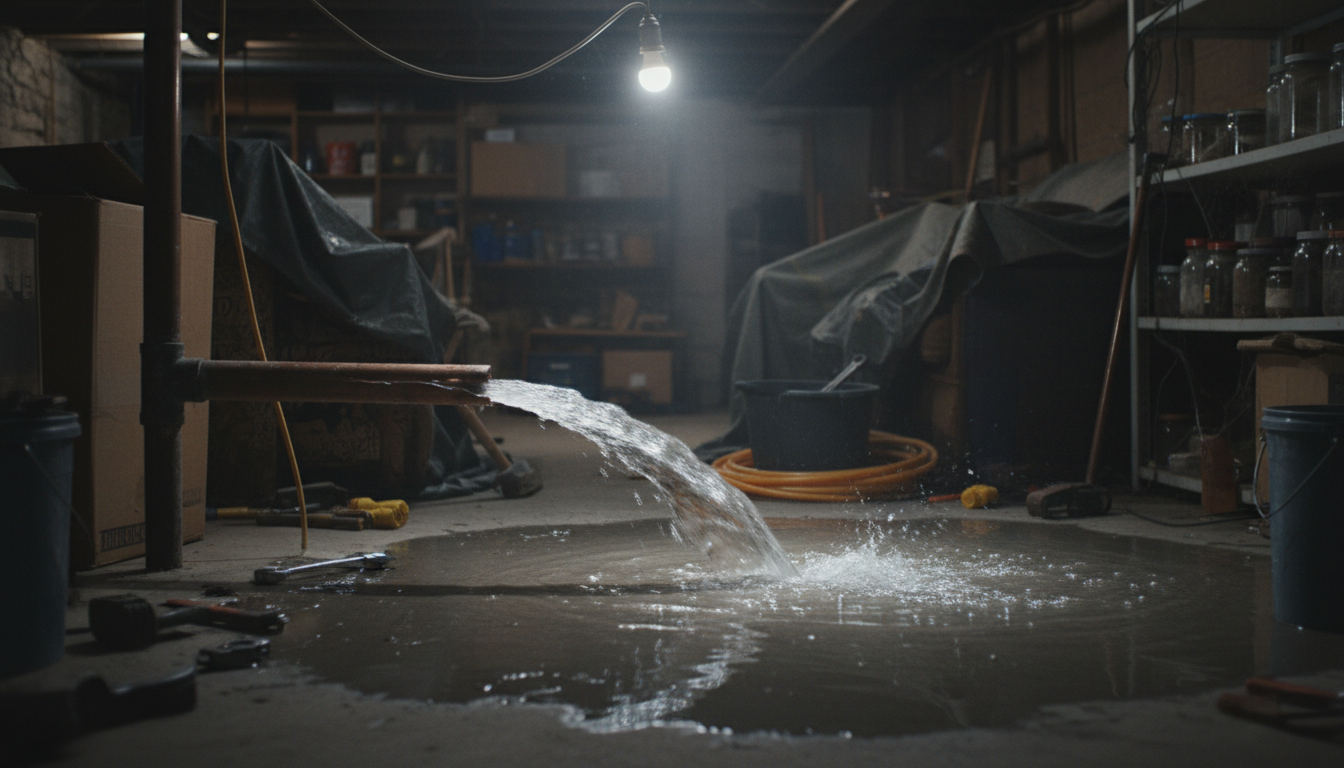
A burst pipe flooding a North Bay basement — one of the clearest signs you need an emergency plumber right now.
If water is actively flooding your home, sewage is backing up, or you smell gas — stop reading and call 705-482-1253 now. For everything else, this guide will help you decide whether you need an emergency plumber tonight or can safely wait until morning.
It's 2am. Something's wrong with your plumbing. Water is going where it shouldn't, or not going where it should. Your first instinct is to Google "emergency plumber near me" — but then you hesitate. Is this really an emergency? Will you get charged a premium for calling at this hour when it could wait until morning?
That hesitation is completely normal. Emergency plumbing calls cost more than regular service calls, and nobody wants to overpay. But waiting too long on a real emergency can turn a $500 repair into $15,000 in water damage, mould remediation, and structural repairs. This guide will help you know the difference.
7 Situations That Need an Emergency Plumber NOW
These situations all share one thing in common: the damage gets worse with every minute you wait. If any of these are happening in your home, don't wait until morning. Call our 24/7 emergency line at 705-482-1253 immediately.
1. Burst Pipe with Active Flooding
This is the most clear-cut emergency in plumbing. A burst pipe can dump hundreds of litres of water into your home per hour. Every minute of delay means more water saturating your floors, walls, insulation, and belongings. In North Bay winters, burst pipes from freezing are extremely common — ice expands inside the pipe until the copper or PEX splits, and when it thaws, water pours out. If you see water spraying or pooling, call for burst pipe repair immediately. While you wait, shut off the main water valve (we'll cover where to find it below).
2. Sewage Backup
If sewage is coming up through your floor drain, toilet, or bathtub, this is a health emergency as much as a plumbing one. Raw sewage contains bacteria, viruses, and parasites that pose serious health risks to your family. Don't try to clean it up yourself until the backup is stopped — more sewage can continue flowing in. A sewer backup requires professional equipment to clear the blockage and sanitize the affected area. The longer sewage sits in your home, the more extensive the contamination and the higher the remediation costs.
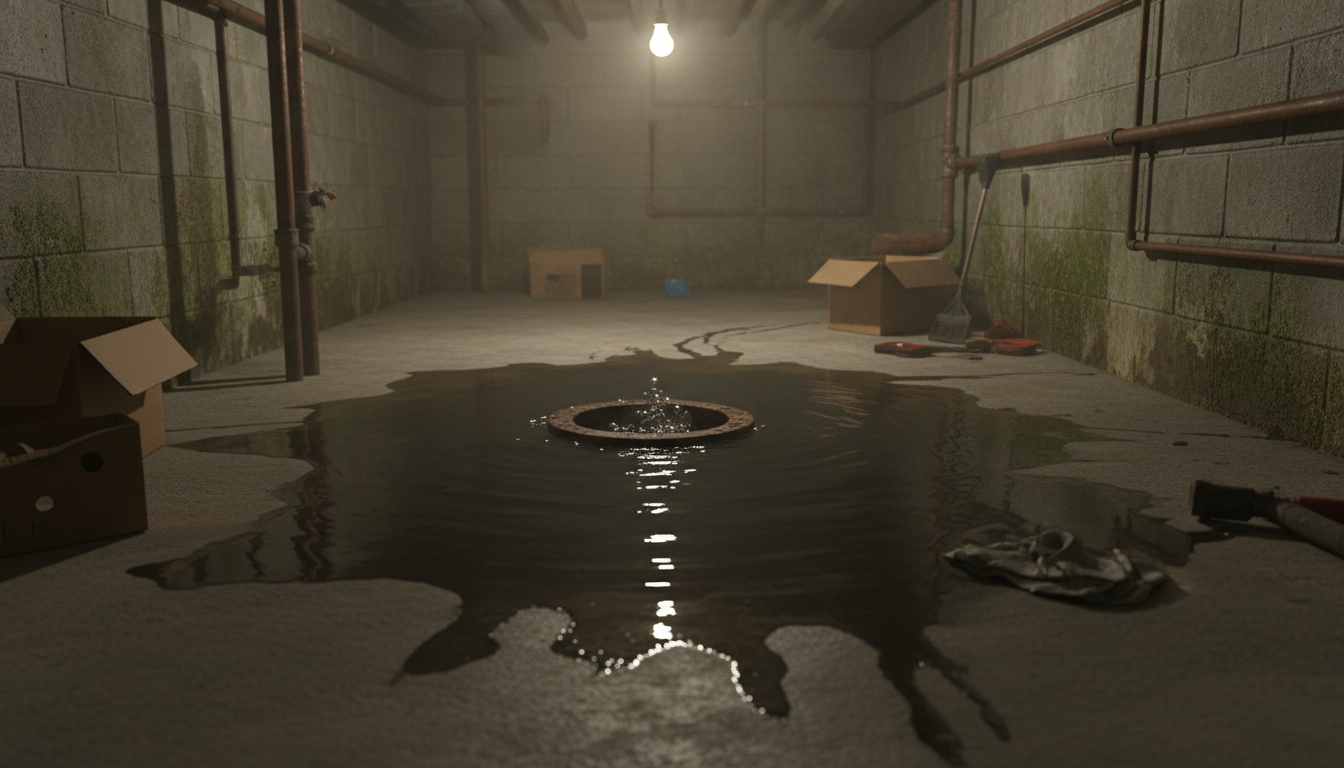
Sewage backing up through a basement floor drain — a health hazard that requires immediate professional response.
3. Gas Leak or Gas Smell
If you smell rotten eggs or sulphur near any gas appliance — your water heater, furnace, gas range, or gas fireplace — this is the most dangerous emergency on this list. Do not turn on or off any electrical switches. Do not light any flames. Do not use your phone inside the house. Get everyone out of the house, move a safe distance away, and then call 911 and your gas utility (Enbridge: 1-866-763-5427). Once the gas company has made the area safe, call a licensed plumber to locate and repair the leak before your gas service is restored.
4. No Water to the Entire House
If every faucet in your home has stopped producing water — and your neighbours still have water — you likely have a main supply line failure. In North Bay, the most common cause is a frozen main supply line during winter, or a catastrophic leak in the supply line between the street and your home. No water means no toilets, no drinking water, no cooking, and no fire suppression. In winter, it also means your heating system may be at risk if it relies on water circulation. This needs a plumber the same day.
5. Overflowing Toilet That Won't Stop
We're not talking about a standard toilet clog you can fix with a plunger. We're talking about a toilet that keeps overflowing even after you've tried plunging, even after the tank has been emptied. If the water keeps rising and won't stop, there's a serious blockage deeper in your drain system — possibly in the main sewer line. Shut off the water supply valve behind the toilet (turn it clockwise). If the overflow doesn't stop, shut off your main water valve. Then call for emergency plumbing service.
6. Frozen Pipes About to Burst
If you turn on a faucet and nothing comes out during a North Bay cold snap, your pipes are frozen. This is a ticking time bomb. Frozen water expands with enormous force — up to 40,000 PSI — and the pipe can burst at any moment. Don't wait for it to thaw on its own. Every hour a pipe stays frozen increases the odds of a catastrophic failure. A plumber can locate the freeze and thaw it safely using professional equipment before the pipe splits. Our frozen pipe repair service responds within 60 minutes.
7. Water Heater Failure in Winter
If your water heater is leaking, making banging noises, or has completely stopped working during a North Bay winter, this qualifies as an emergency. A leaking water heater can dump 150–300 litres onto your floor. A failed water heater in -30°C weather means no hot water for bathing, cleaning, or warming your home. If you see water pooling around the base, shut off the cold water supply valve at the top of the tank and the gas valve or electrical breaker. Call for emergency service.
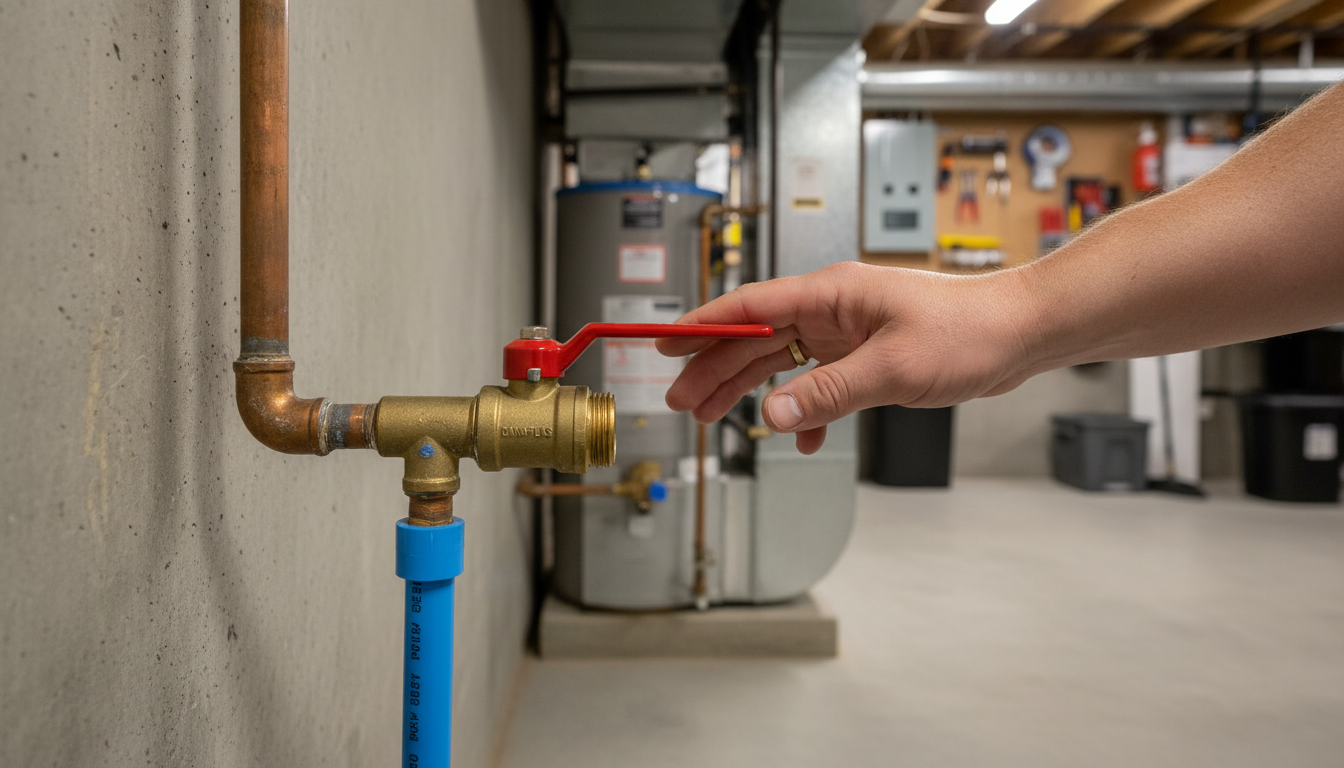
Your main water shutoff valve — knowing where this is and how to use it is the single most important thing you can do in a plumbing emergency.
5 Situations That Can Wait Until Morning
Not everything that feels urgent at 2am is actually an emergency. These common plumbing issues are annoying, but they won't cause significant damage overnight. Save yourself the after-hours premium and call during regular business hours.
1. A Slow Drain
If your kitchen sink, shower, or bathtub is draining slowly but still draining, this is not an emergency. A slow drain is usually caused by a gradual buildup of hair, soap residue, grease, or mineral deposits. It won't suddenly turn into a flood overnight. Just stop using that fixture until a plumber can clear it during regular hours. If it stops draining completely and you only have one bathroom, you might consider an emergency call — but one slow drain can wait.
2. A Dripping Faucet
A dripping faucet wastes water and can be irritating, especially at night. But it's not an emergency. Place a towel or bowl under the drip to catch the water, and schedule a repair during regular hours. A dripping faucet typically wastes about 30 litres per day — not ideal, but not destructive. The repair usually involves replacing a worn washer or cartridge, which takes a plumber about 30 minutes.
3. A Running Toilet
If your toilet runs continuously or cycles on and off periodically, the internal flapper valve or fill valve is likely worn. It wastes water (up to 750 litres per day in severe cases), but it won't cause flooding or damage. If the sound is driving you crazy, you can usually stop it by lifting the tank lid and pushing the flapper down into place. Or turn off the supply valve behind the toilet until morning.
4. Low Water Pressure
If your water pressure has dropped but you're still getting water, this can wait. Common causes include a partially closed shutoff valve, sediment buildup in the aerator, or municipal water supply issues. Try unscrewing the aerator on the affected faucet and cleaning it — mineral buildup in the aerator screen is the most common cause of low pressure at a single fixture. If all fixtures are affected, check with your neighbours to rule out a municipal issue.
5. A Small Leak You Can Contain with a Bucket
If a pipe joint, fixture connection, or valve is dripping slowly enough that a bucket or towel can contain it overnight, this can wait. Place a container under the leak, turn off the water supply to that fixture if possible, and call during regular hours. The key qualifier here is "can contain" — if the leak is getting worse, if the bucket fills in less than an hour, or if the leak is near electrical wiring, upgrade this to an emergency.
What to Do While You Wait for the Plumber
You've called for emergency service. The plumber is on the way. Here's exactly what to do in the meantime to minimize damage and keep your family safe.
Emergency Action Checklist
- Shut off the main water valve. In most North Bay homes, the main shutoff valve is in the basement, near the front wall of the house where the water supply line enters from the street. It's usually a round gate valve (turn clockwise to close) or a quarter-turn ball valve (turn the handle perpendicular to the pipe). If you're on well water, the shutoff is typically near your pressure tank. Find your shutoff valve before an emergency happens — label it so anyone in the household can find it.
- Shut off your water heater. Once the main water is off, turn off your water heater to prevent damage from heating an empty tank. For gas water heaters, turn the gas valve to "pilot" or "off." For electric, flip the breaker. This prevents the heating elements from burning out or the tank from overheating.
- Open faucets to relieve pressure. After shutting off the main valve, open several faucets throughout the house to drain remaining water from the lines and relieve any trapped pressure. Start with the lowest fixtures (basement laundry tub) to drain the most water. This reduces the amount of water that can leak from the damaged area.
- Contain water with towels and buckets. Use every towel, blanket, and container you have to absorb and contain standing water. Focus on keeping water away from electrical outlets, your electrical panel, and electronics. If water is near your electrical panel, do not approach it — call the fire department.
- Document damage for insurance. Take photos and video of all water damage before you start cleaning up. Document the source of the leak, the extent of water spread, and any damaged belongings. Your home insurance claim will be much smoother with visual evidence taken at the time of the incident. Keep receipts for any emergency purchases (shop vac, fans, dehumidifier).
- Move valuables to a dry area. Get electronics, documents, photo albums, and anything irreplaceable out of the affected area. Move furniture off wet carpet if possible. If items are too heavy to move, place aluminium foil or plastic sheeting under furniture legs to prevent staining.
Most importantly: don't panic. Once the water is shut off, the damage stops getting worse. You've bought yourself time. The plumber will handle the rest.
How Much Does an Emergency Plumber Cost?
Emergency plumbing costs more than regular service — that's a reality of the industry. Someone has to wake up at 2am, drive through a North Bay snowstorm, and fix your problem. Here's what to expect so there are no surprises.
Standard emergency rate: $225/hour. This is the base rate for emergency service during after-hours (evenings, weekends, and holidays). Regular business hours rates are lower, which is why the "can it wait?" question matters.
After-hours premium: Emergency calls outside regular business hours (typically before 8am or after 5pm, plus weekends and holidays) carry a 1.5x premium over standard rates. This covers the on-call availability, after-hours dispatch, and the reality that emergency work disrupts the plumber's schedule the following day.
Two-hour minimum: Most emergency calls have a two-hour minimum charge. Even if the repair takes 45 minutes, you'll be billed for two hours. This covers the travel time and opportunity cost of an emergency dispatch.
Upfront quote before work starts: A reputable emergency plumber will diagnose the problem, explain what needs to be done, and give you a clear quote before any work begins. You should never be surprised by the final bill. If a plumber starts working without explaining costs first, that's a red flag.
Typical emergency repair costs: Most emergency plumbing repairs in North Bay fall between $500 and $2,000, depending on the severity. A burst pipe repair is typically $400–$800 for the plumbing work itself. A sewer backup clearing runs $300–$600. Water heater replacement is $1,500–$3,000 installed. These are the plumbing costs only — water damage remediation, if needed, is separate. Check our pricing page for current rates on specific services.
The math that matters: A $500 emergency plumbing call at 2am sounds expensive until you compare it to the alternative. A burst pipe left running overnight can cause $10,000–$25,000 in water damage. A sewage backup left until morning can contaminate your entire basement — remediation costs start at $5,000. The emergency premium is insurance against catastrophic damage.
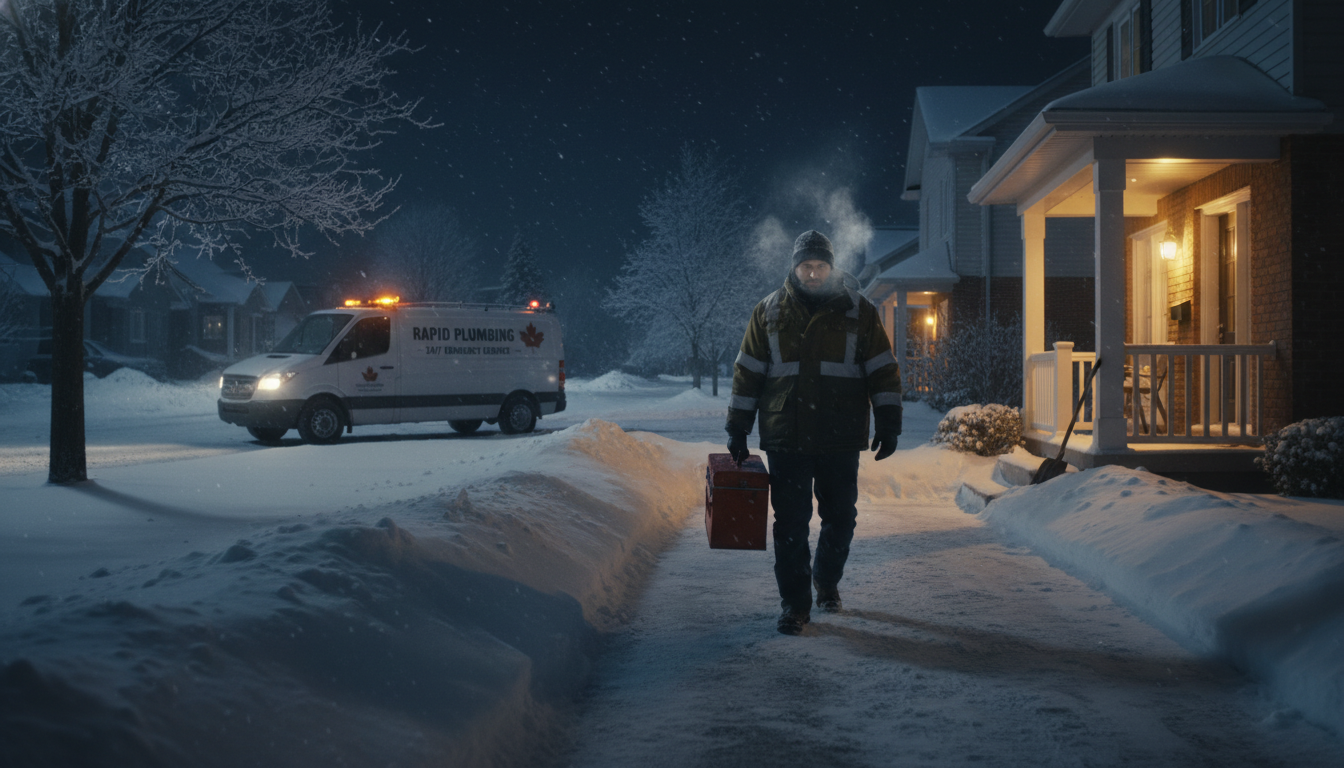
Our emergency plumber arriving at a North Bay home during a winter night call — we respond within 60 minutes across the Nipissing District.
Why North Bay Emergencies Are Different
Plumbing emergencies in North Bay and the Nipissing District come with challenges that plumbers in Toronto or Ottawa rarely face. Our climate and geography make certain emergencies more severe and more common.
Extreme cold makes pipe emergencies worse. When a pipe bursts in a Toronto home, it's a problem. When a pipe bursts in a North Bay home at -35°C, it's a crisis. The extreme cold means water freezes as it spreads, making cleanup harder. It also means the burst is often caused by ice expansion, which can damage multiple joints along the same pipe run. And if the heat goes out at the same time (which happens during power outages), additional pipes can freeze within hours, creating a cascade of failures. We see more frozen pipe emergencies in a single January week than many Southern Ontario plumbers see in an entire winter.
Spring melt overwhelms drainage systems. North Bay's spring thaw is sudden and dramatic. Feet of accumulated snow melt over a few weeks, saturating the ground and overwhelming storm drains, weeping tiles, and sump pump systems. This is prime season for basement flooding, sewer backups, and sump pump failures. If your sump pump hasn't been serviced before spring melt, you're gambling with your basement.
Rural properties are farther from help. If you live in Corbeil, Bonfield, Astorville, or along Lake Nipissing, emergency response times are longer than in-town North Bay. That extra 20–30 minutes of travel time means 20–30 more minutes of water damage. Knowing how to shut off your water and take immediate action is even more critical for rural homeowners. It's also why we maintain emergency coverage across the entire Nipissing District — not just the city.
Power outages disable sump pumps. North Bay sees multiple power outages each winter from ice storms, high winds, and heavy snow on power lines. When the power goes out, your sump pump stops. If the outage coincides with spring melt or heavy rain, your basement can flood in hours. A battery backup for your sump pump is one of the smartest investments a North Bay homeowner can make — talk to us about backup sump pump systems.
How to Prevent Plumbing Emergencies
The best emergency plumber call is the one you never have to make. Most plumbing emergencies are preventable with basic maintenance and preparation. Here's how to protect your home.
Schedule an annual plumbing inspection. A licensed plumber can catch problems before they become emergencies. Corroded fittings, aging supply lines, deteriorating water heater anodes, cracked wax seals on toilets — these are all ticking time bombs that a trained eye can spot in a routine inspection. An annual inspection costs $150–$250 and can prevent thousands in emergency repairs. Think of it like a physical for your home.
Winterize your pipes before November. North Bay winters are brutal on plumbing. Insulate all exposed pipes in your basement, crawl space, and garage. Install heat cables on pipes that have frozen before. Disconnect and drain outdoor hose bibs. Seal air leaks around rim joists and foundation penetrations. For detailed instructions, read our complete guide: How to Prevent Frozen Pipes in North Bay.
Know where your shutoff valves are. Your main water shutoff, water heater shutoff, toilet supply valves, and individual fixture shutoffs should all be labeled and accessible. Every adult in your household should know how to shut off the main water supply. The 30 seconds it takes to close a shutoff valve can prevent thousands in water damage. Test your main shutoff valve annually to make sure it still turns — gate valves can seize if they sit untouched for years.
Maintain your sump pump. Test your sump pump every three months by pouring a bucket of water into the pit and making sure the pump activates and discharges properly. Clean the intake screen annually. Consider installing a battery backup system — your sump pump is useless during the power outages that often accompany the worst storms. Replace sump pumps every 7–10 years, even if they seem to be working fine.
Install a backwater valve. A backwater valve prevents sewage from backing up into your home when the municipal sewer system is overwhelmed. The City of North Bay and many municipalities offer rebates for backwater valve installation. It's a one-time investment of $2,000–$4,000 that eliminates the risk of the most disgusting plumbing emergency — raw sewage flooding your basement. If you don't have one, get one.
Plumbing Emergency Right Now?
Don't wait and hope it gets better. Our emergency plumbers respond within 60 minutes across North Bay and the Nipissing District. One call gets it handled.
Call 705-482-1253