Ontario's Building Code governs every plumbing installation, alteration, and repair in the province — including your home.
All plumbing work in Ontario is governed by Part 7 of the Ontario Building Code (OBC). Whether you're adding a bathroom, replacing a water heater, or finishing a basement, the code dictates what's allowed, what requires a permit, and when you need a licensed plumber. Homeowners can do some of their own plumbing on their primary residence, but the work must still meet code and pass inspection.
If you're a homeowner in North Bay planning a renovation, building an addition, or just wondering whether you can install that new bathroom sink yourself, the Ontario Plumbing Code affects you directly. The problem is that most homeowners have never read it — and the actual code document is hundreds of pages of technical specifications that weren't written for regular people.
This guide breaks down what you actually need to know. No legalese, no technical jargon — just plain-English answers to the questions North Bay homeowners ask us most often about plumbing permits, inspections, and when DIY is (and isn't) a good idea.
What the Ontario Plumbing Code Covers
The Ontario Plumbing Code isn't a standalone document. It's Part 7 of the Ontario Building Code (OBC), which is the law that governs all construction and renovation in Ontario. Part 7 specifically covers the design, installation, and maintenance of plumbing systems in all buildings — residential, commercial, and industrial.
The code applies to every plumbing scenario you'd encounter as a homeowner:
- All new plumbing installations — Adding a bathroom, installing a new kitchen sink, running water lines to a laundry room, or plumbing a wet bar in the basement. Any time new pipes, fixtures, or drains are being installed, the code applies.
- Alterations to existing plumbing — Moving a toilet to a different wall, relocating drain lines during a kitchen renovation, or rerouting supply lines. Changing the layout or configuration of existing plumbing triggers code requirements.
- Repairs that change the system — Replacing a section of drain pipe with a different material, upsizing a water supply line, or modifying venting. Repairs that change the characteristics of the plumbing system must meet current code standards.
- Water supply and distribution — Pipe sizing, material requirements, pressure regulations, and cross-connection control. The code specifies exactly how water must be delivered safely throughout your home.
- Drainage, waste, and venting (DWV) — How wastewater leaves your home. This includes drain pipe slopes, vent pipe sizing, trap requirements, and connections to the municipal sewer or your septic system.
- Backflow prevention — Protecting the municipal water supply from contamination. The code requires specific backflow prevention devices at certain points in your plumbing system.
The key thing to understand: the code isn't optional. It's Ontario law. Work that doesn't meet code can result in failed inspections, orders to redo the work, insurance claim denials, and complications when you sell your home. More importantly, plumbing code exists to protect health and safety — improperly installed plumbing can contaminate drinking water, create sewage backups, and cause structural water damage.
Obtaining a plumbing permit before starting work protects you legally and ensures your installation meets Ontario's safety standards.
When Do You Need a Plumbing Permit?
This is the question we get asked most often. The short answer: any time you're adding new plumbing or changing the layout of existing plumbing, you need a permit. The City of North Bay Building Department issues plumbing permits, and inspections are required before the work can be covered up (behind walls or under floors).
You DO Need a Permit For:
- Installing a new fixture — Adding a toilet, sink, shower, bathtub, dishwasher connection, or laundry tub that wasn't there before. This includes finishing a basement with a bathroom or adding a second-floor laundry.
- Moving existing plumbing — Relocating a toilet, sink, or any drain/supply line to a different position during a renovation. Even moving a fixture a few feet within the same room typically requires a permit.
- Water heater replacement (in some cases) — If you're replacing a water heater with the same type in the same location, most municipalities including North Bay don't require a plumbing permit. However, if you're changing the type (e.g., tank to tankless), moving it to a different location, or modifying the venting, a permit is required. Gas water heaters always require a gas permit through TSSA regardless.
- New construction — All plumbing in a new home build requires permits and multiple inspections. Your general contractor or plumber handles this, but it's your responsibility as the homeowner to verify permits are pulled.
- Renovations that change the plumbing layout — Gutting a kitchen and putting the sink on a different wall, converting a closet into a half-bath, or opening up a bathroom and reconfiguring the fixtures. If the plumbing moves, you need a permit.
- Sewer line replacement or repair — Replacing your sewer lateral (the pipe from your house to the municipal connection) requires a permit. So does lining or replacing sections of underground drainage within or beneath your home.
- Backflow device installation — Installing or replacing backflow prevention devices requires a permit and must be done by a certified installer.
You Do NOT Need a Permit For:
- Like-for-like replacement — Replacing an existing faucet with a new faucet, swapping out a toilet for a new toilet in the same location, or replacing a shut-off valve. If the new fixture goes in the exact same spot with the same connections, no permit is needed.
- Faucet swaps and fixture upgrades — Changing a kitchen faucet, upgrading a showerhead, replacing a toilet fill valve or flapper, or installing a new garbage disposal on an existing drain connection.
- Toilet replacement — Removing an old toilet and installing a new one on the same flange. No permit required as long as you're not moving it or modifying the drain.
- Minor repairs — Fixing a leaky pipe joint, replacing a section of exposed pipe with the same material and size, clearing a drain blockage, or replacing a shut-off valve.
- Appliance connections — Hooking up a dishwasher or washing machine to existing supply and drain connections that are already in place.
When in Doubt, Call the Building Department
If you're not sure whether your project needs a permit, call the City of North Bay Building Department before you start work. A quick phone call can save you from having to rip out and redo unpermitted work later. The building department staff are genuinely helpful — they'd rather answer a question upfront than deal with a code violation after the fact.
You can also call us at 705-482-1253 — we handle permits on behalf of our clients for every project that requires one.
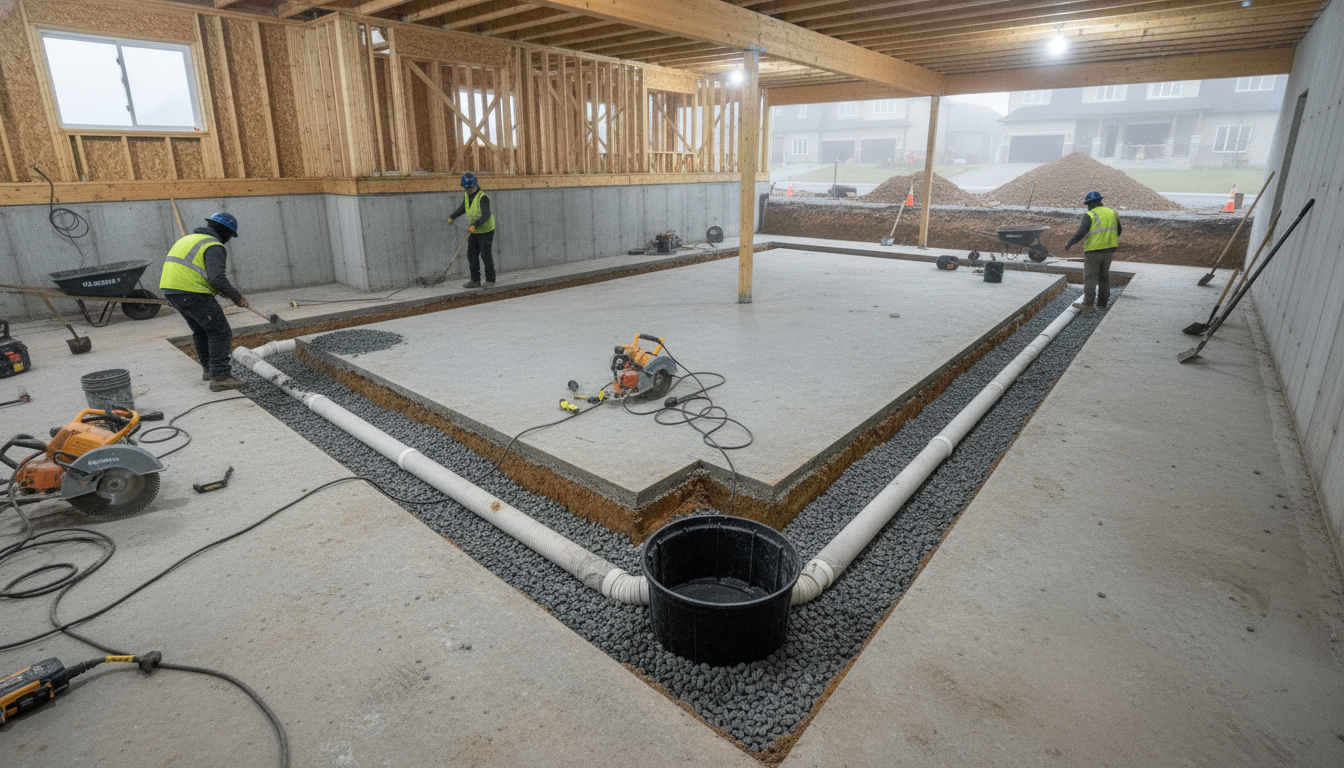
Professional plumbing installations are built to meet or exceed Ontario Building Code requirements from the start.
What Can Homeowners Do Themselves?
Here's something many homeowners don't realize: Ontario law allows homeowners to do their own plumbing work on their primary residence. You don't need a plumbing licence to work on your own home. However — and this is the critical part — the work must still meet code, you still need to pull permits where required, and you still need to pass the same inspections that a licensed plumber would.
In practice, this means a homeowner can legally:
- Install a new bathroom in their own basement (with a permit and inspection)
- Replace or add plumbing fixtures in their own home
- Run new water supply lines or drain lines (with a permit and inspection)
- Perform any plumbing repair or maintenance on their own primary residence
But here's the reality check. Just because you're legally allowed to do your own plumbing doesn't mean it's a good idea for every project. The Ontario Building Code is technical and detailed. Getting pipe slopes wrong by even a fraction means drains that don't flow properly. Incorrect venting causes gurgling drains, sewer gas in your home, and traps that get siphoned dry. Improper connections can contaminate your drinking water.
The consequences of DIY plumbing gone wrong include:
- Failed inspections — You'll have to tear out the work and redo it. The permit fee is non-refundable, and you may need to pay for a re-inspection.
- Water damage — A poorly soldered joint or an improperly glued drain fitting might hold for a week, then fail inside a wall. By the time you notice, the damage is done.
- Insurance issues — If unpermitted or non-code-compliant plumbing causes a water damage claim, your insurer may deny it. This is not theoretical — we've seen it happen to North Bay homeowners.
- Problems when selling — Home inspectors flag unpermitted work. Buyers' lawyers request proof of permits. Unpermitted plumbing work can delay or kill a home sale.
Our recommendation: homeowners can confidently handle simple tasks like replacing faucets, swapping toilets, and basic repairs. For anything that requires a permit — new fixtures, layout changes, drain and vent work — hire a licensed plumber. The cost of professional installation is almost always less than the cost of fixing DIY mistakes.
When You MUST Hire a Licensed Plumber
While Ontario allows homeowners to do their own plumbing on their primary residence, there are specific categories of work where the law requires a licensed professional. No exceptions.
- Gas work — TSSA mandatory. Any work involving natural gas or propane — gas line installation, gas appliance hookups, gas water heaters, gas fireplaces — must be performed by a TSSA-licensed gas technician. This is provincial law enforced by the Technical Standards and Safety Authority. An unlicensed person doing gas work is committing an offence and putting lives at risk. Gas leaks cause explosions and carbon monoxide poisoning.
- Backflow device installation and testing. Backflow prevention devices protect the municipal water supply from contamination. Ontario requires that these devices be installed and tested by certified backflow prevention specialists. Annual testing is also mandatory, and test reports are filed with the municipality.
- Sewer connections to municipal systems. Connecting or reconnecting a building sewer to the City of North Bay's sanitary sewer requires a licensed plumber. This work involves public infrastructure and must be inspected by both the building department and public works.
- Commercial and multi-unit residential work. The homeowner exemption only applies to your own primary residence. Plumbing work in commercial buildings, rental properties you own, multi-unit residential buildings, and any property that isn't your primary home must be done by a licensed plumber.
- Work on properties you don't occupy. You cannot do your own plumbing at a rental property, cottage, or investment property under the homeowner exemption. The exemption is specifically for your primary residence that you live in.
How to Verify a Plumber's Licence
Every licensed plumber in Ontario holds credentials through the Ontario College of Trades (now Skilled Trades Ontario). You can verify any tradesperson's licence status online at skilledtradesontario.ca. Ask for their licence number before any work begins. A legitimate plumber will have no problem showing you their credentials.
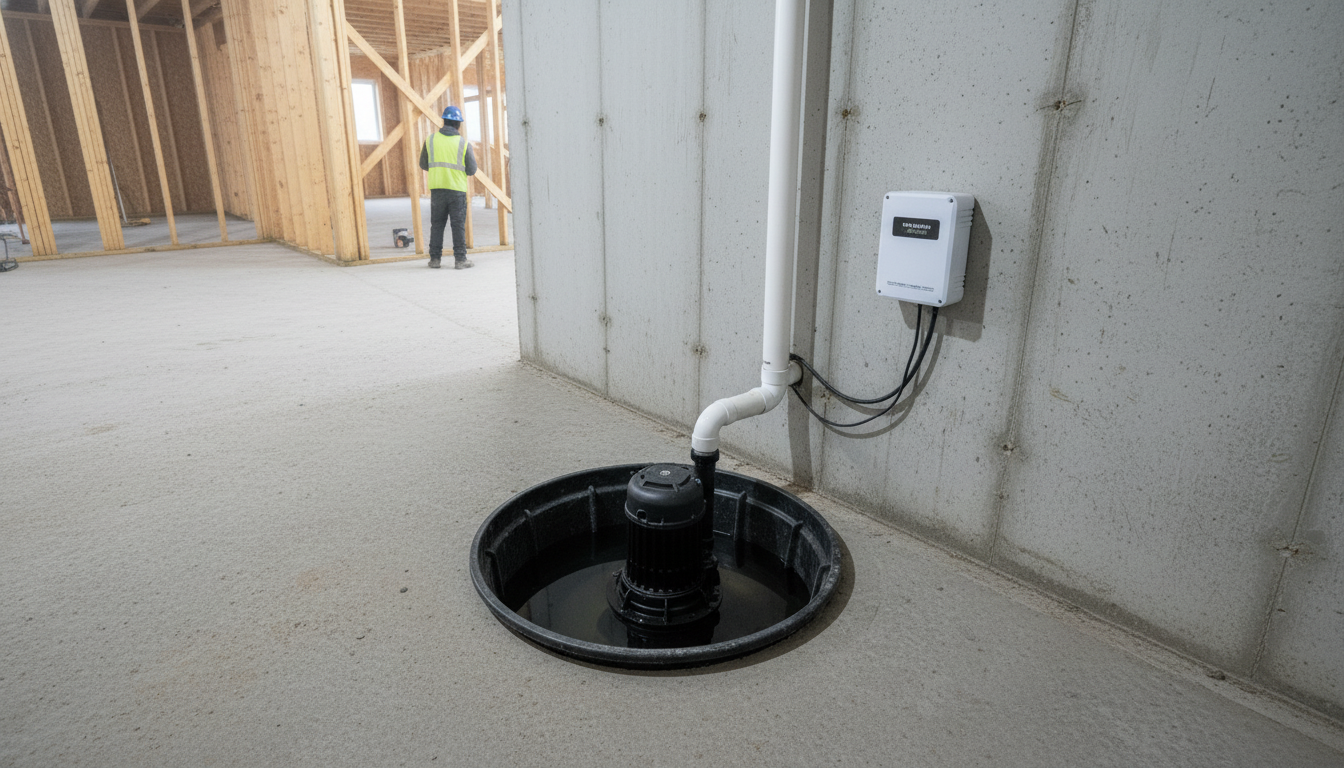
A code-compliant sump pump installation in a North Bay home — proper installation protects your basement and meets all OBC requirements.
How Inspections Work in North Bay
When you pull a plumbing permit in North Bay, the City's building department will require inspections at specific stages of the work. Understanding how this process works helps you plan your renovation timeline and avoid costly delays.
The Inspection Process
Plumbing inspections in North Bay typically happen in two stages:
- Rough-in inspection — This happens after all the pipes are installed but before walls, ceilings, and floors are closed up. The inspector needs to see the drain, waste, and vent (DWV) piping, water supply lines, and all connections while they're still exposed. This is the most critical inspection — it catches problems before they get buried behind drywall. Never close up walls until you've passed your rough-in inspection.
- Final inspection — This happens after fixtures are installed and the system is operational. The inspector checks that fixtures are properly connected, drains flow correctly, there are no leaks under pressure, and all backflow prevention is in place. Once you pass the final inspection, the permit is closed and the work is officially approved.
What Inspectors Look For
Building inspectors in North Bay are checking your plumbing against Part 7 of the Ontario Building Code. Here's what they're specifically looking at during inspections:
- Proper pipe sizing — Are the drain pipes, supply lines, and vent pipes the correct diameter for the fixtures they serve? Undersized pipes cause drainage problems and pressure issues.
- Correct drain slope — Horizontal drain pipes must slope toward the sewer at the correct grade (typically 1/4 inch per foot for pipes 3 inches and smaller). Too little slope and waste doesn't flow. Too much slope and liquids outrun solids, causing blockages.
- Proper venting — Every fixture trap needs a vent to prevent siphoning and allow proper drainage. Inspectors verify vent connections, vent pipe sizes, and that vents terminate correctly through the roof.
- Support and hangers — Pipes must be properly supported at code-specified intervals. Unsupported pipe runs sag over time, creating low spots that collect debris and cause blockages.
- Correct materials and connections — The code specifies which pipe materials are approved and how they must be joined. Inspectors check for proper solvent welding on ABS/PVC, correct solder joints on copper, and approved transition fittings between different materials.
- Cleanout access — The code requires cleanouts at specific locations so drain lines can be serviced in the future. Inspectors verify cleanouts are present, accessible, and properly sized.
- Backflow protection — Appropriate backflow prevention must be installed at any point where contaminated water could flow backward into the potable water supply.
To book a plumbing inspection in North Bay, you or your plumber contacts the building department with your permit number. Inspections are typically scheduled within 24 to 48 hours. Be ready — all work must be accessible and visible. Don't insulate pipes or close walls before the inspector has signed off.
Common Code Violations We See
After decades of plumbing work across North Bay and the Nipissing District, we've seen every code violation in the book. These are the ones that come up most often — usually in homes where previous plumbing work was done without permits or by someone who didn't know the code.
Improper Venting
This is the single most common code violation in residential plumbing. Fixtures installed without proper vents, vents that are too small, vents that terminate in the attic instead of through the roof, or "cheater vents" (air admittance valves) installed where a full vent is required. Symptoms include gurgling drains, slow drainage, and sewer gas smell in the house. We fix improper venting on a weekly basis during renovation plumbing projects where we're opening up walls and finding previous work that was never inspected.
Wrong Pipe Slope
Drain pipes installed with too little slope (or no slope at all) don't drain properly. Pipes installed with too much slope let water run ahead of solid waste, leaving debris behind to cause blockages. We routinely find horizontal drain runs that are dead flat or even running uphill slightly — a guaranteed recipe for chronic drain problems.
Missing Cleanouts
The code requires cleanouts at specific intervals and at changes of direction in drain lines. Without cleanouts, drain blockages deep in the system become much harder and more expensive to clear. We regularly encounter drain systems where the only access point is the main stack — no cleanouts anywhere in the horizontal runs. This makes routine drain cleaning far more difficult than it should be.
Incorrect Backflow Protection
Cross-connections between the potable water supply and potential contamination sources — garden hose connections without vacuum breakers, boiler fill valves without proper backflow prevention, irrigation system connections without RPZ valves. Backflow violations are serious because they can contaminate drinking water for your entire household and potentially the municipal water system.
No Permits Pulled
The most common "violation" isn't a technical issue at all — it's work done without permits. Basement bathrooms, kitchen renovations, and additions where the plumbing was never permitted or inspected. This is the issue that comes back to bite homeowners hardest when they try to sell their home or make an insurance claim. If the work was done right, getting a retroactive inspection is straightforward. If it wasn't done right, you're looking at costly corrections.
Need Plumbing That Meets Code?
Whether it's a new construction project, a renovation, or fixing someone else's non-compliant work, we handle permits, inspections, and code-compliant installation from start to finish.
Call 705-482-1253